Did you know that visitors, contractors, and even directors are required to wear personal protective equipment, commonly abbreviated as PPE, when entering a project site?
Even for a short visit, anyone entering a project area must use PPE, just like a permanent worker on site. This requirement is set out in Article 5 of Permenaker No. 8 of 2010. Many people overlook this rule, even though the penalties for ignoring it are clearly stated.
By definition, Personal Protective Equipment, or PPE, is a device that isolates part or all of a worker's body from potential hazards in the workplace, as defined in Article 1 of Permenaker No. 8 of 2010. This same regulation also serves as the official basis for grouping types of PPE into eight categories according to the body part they protect.
What Is Personal Protective Equipment (PPE) and Its Legal Basis?
The official types of PPE are regulated under Permenaker No. 8 of 2010 concerning Personal Protective Equipment. This regulation classifies PPE into eight main categories: head protection, eye and face protection, ear protection, respiratory protection, hand protection, foot protection, protective clothing, and personal fall protection equipment along with flotation devices.
Article 2 states that employers are required to provide PPE free of charge to workers. The PPE provided must also comply with the Indonesian National Standard (SNI) or applicable international standards, and its quality must be monitored through the PPE management system set out in Article 7.
Before determining which type of PPE to use, safety professionals typically run a hazard identification process first, known as HIRADC, or Hazard Identification, Risk Assessment, and Determining Control. This process is what determines which PPE is relevant for each work area, rather than a product catalog deciding it first. Below is the complete list.
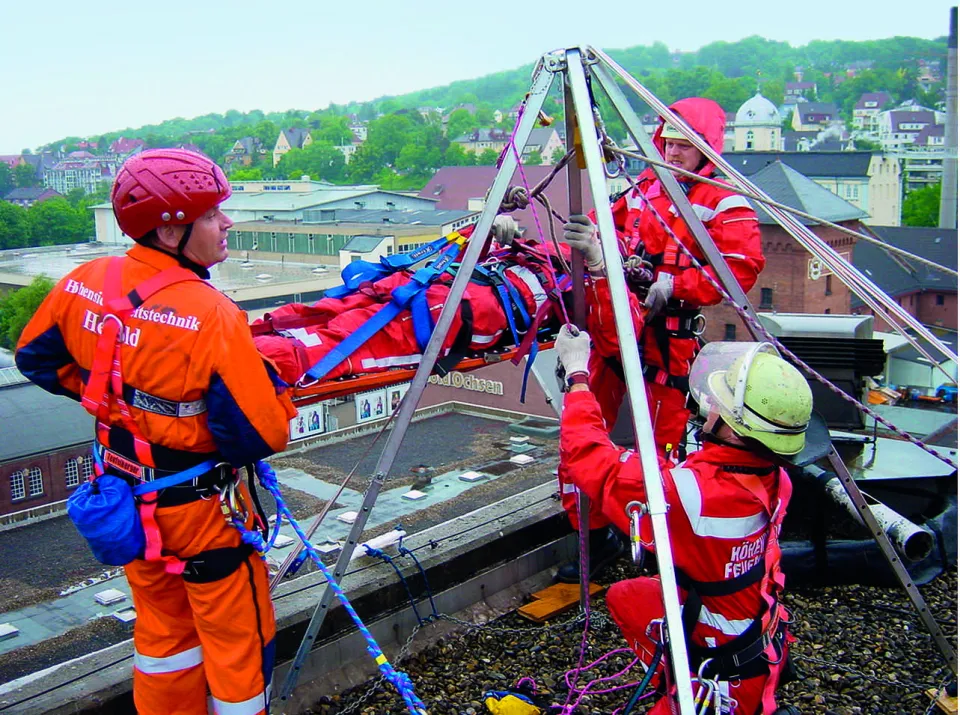

8 Official Types of PPE Based on Permenaker No. 8 of 2010
1. Head Protection
Head protection guards against impact, falling objects, and sparks. The most common examples are safety helmets and hair protection caps. On construction sites, the color of a safety helmet often carries its own meaning, indicating a worker's role and level of risk exposure.
One example of a helmet built for both protection and performance is SpanSet's Talgar high-performance helmet, designed to absorb impact without adding excessive strain to the neck during long working hours.
2. Eye and Face Protection
Eye and face protection shields against chemical splashes, flying particles, and radiation. Safety glasses and face shields fall under this category. Grinding and welding workers must wear them, since hot metal particles can fly toward the face at high speed.
3. Ear Protection
Ear protection comes in the form of earplugs or earmuffs, designed to block excessive sound pressure. Industries with heavy machinery, such as factories and mines, usually require this equipment. Noise levels above 85 decibels over an eight-hour shift are already enough to cause permanent hearing damage.
4. Respiratory Protection
Respiratory protection filters dust, vapor, chemical gases, or microorganisms before they enter the airway. Types range from simple masks to respirators with a self-contained oxygen supply. Selection must be based on the specific airborne contaminant, not on comfort alone.
5. Hand Protection
Hand protection guards against heat, chemicals, electricity, and cuts. Different types of gloves are designed for different risks; heat-resistant gloves are not automatically chemical-resistant. Choosing the wrong type is like wearing a raincoat to go swimming, protection exists, but against the wrong threat.
6. Foot Protection
Foot protection prevents injury from falling objects, punctures, or slips. Safety footwear for working at height usually has an anti-slip sole with a stronger grip than ordinary work shoes. Some models also include a steel toe cap at the front.
7. Protective Clothing
Protective clothing shields the body from extreme temperatures, fire, chemical splashes, or microorganisms. It can take the form of coveralls, aprons, or work vests. Medical workers and chemical industry workers are the two groups that rely on this category the most.
8. Personal Fall Protection Equipment and Flotation Devices
This eighth category covers two groups at once: personal fall protection equipment and flotation devices. The first is mandatory when working at height, while the second is mandatory when working in areas with a drowning risk. Our focus here is on fall protection, since this is where the complexity is highest.
Personal fall protection equipment consists of several components that work together as one system, not as a single device. A full body harness is the main component that absorbs the body's load during a fall, paired with a lanyard that transfers the shock force to the anchor point.
Relevant standards for full body harnesses include EN 361 from Europe and ANSI Z359.11 from the United States, alongside SNI as the applicable standard in Indonesia. SpanSet offers a 5-point harness variant specifically designed for fall arrest applications combined with work restraint.
Wearing the equipment correctly matters just as much as selecting the right product. Knowing how to properly wear a body harness determines whether the system performs as intended when it's needed, or fails at the critical moment.
This equipment also requires regular inspection. Fall protection equipment inspection conducted on a routine basis can detect webbing cracks, hardware corrosion, or loosening stitches before the equipment fails to hold a load.
Types of PPE by Work Location: Construction, Oil and Gas, Factories, and Height Work
The official classification above is important from a legal standpoint, but in practice, workers usually identify PPE by the type of job they do. Below is an overview of PPE by sector, as a complement to the Permenaker classification above.
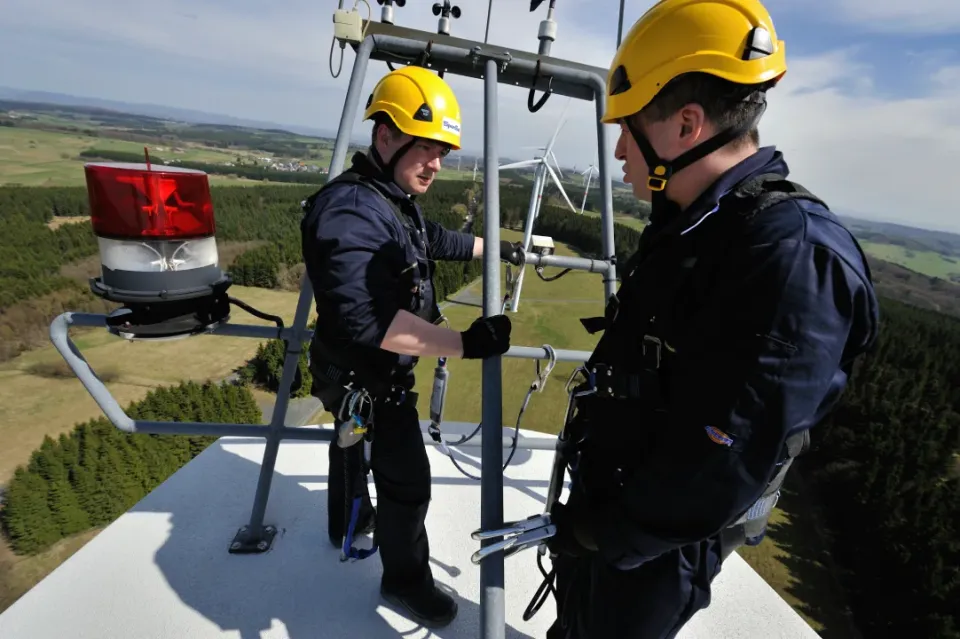
1. PPE for Working at Height
PPE for working at height includes a full body harness, lanyard, helmet, and footwear with a strong grip as the minimum combination. But this combination is only effective if the work site already meets the requirements for working at height, such as a suitable anchor point and a clear evacuation route.
This combination of PPE must also account for the fall clearance distance before a worker reaches the surface below. A lanyard that is too long for a low anchor point can still cause a worker to hit the ground, even when the PPE is worn correctly. That's why calculating fall clearance is a mandatory step before height work begins, not an optional add-on after an incident occurs.
Personal fall protection equipment also cannot stand alone without a rescue plan. Once a worker is left hanging from a lanyard after a fall, time becomes the deciding factor, since suspension trauma can set in within just a matter of minutes.
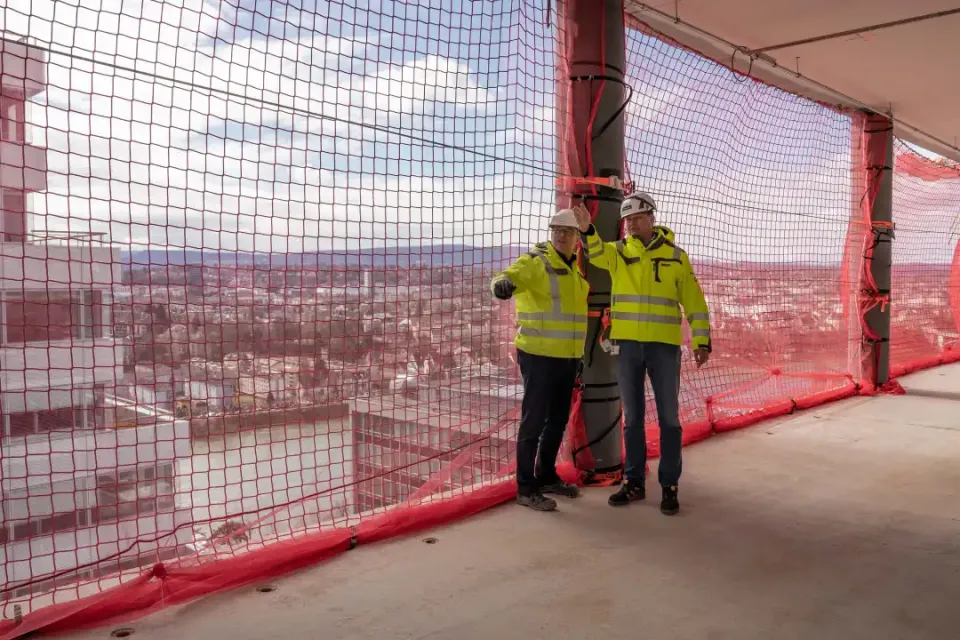
2. PPE for Construction
Construction workers face exposure to dust, falling materials, and unstable surfaces all at once. Helmets, protective goggles, dust masks, gloves, and safety shoes form the basic combination. If the job involves a work-at-height platform such as scaffolding, a full body harness automatically becomes mandatory.
Risk on a construction project also shifts as the work progresses, rather than staying constant from start to finish. During the concrete pouring phase, cement dust and splashing mortar are more dominant, while during the steel structure phase, the risk of falls and sharp objects becomes more prominent.
Many field incidents actually stem from a failure to inspect the main components of a scaffold, rather than from PPE not being worn. A worker with complete PPE can still get injured if the platform they're standing on isn't properly assembled.
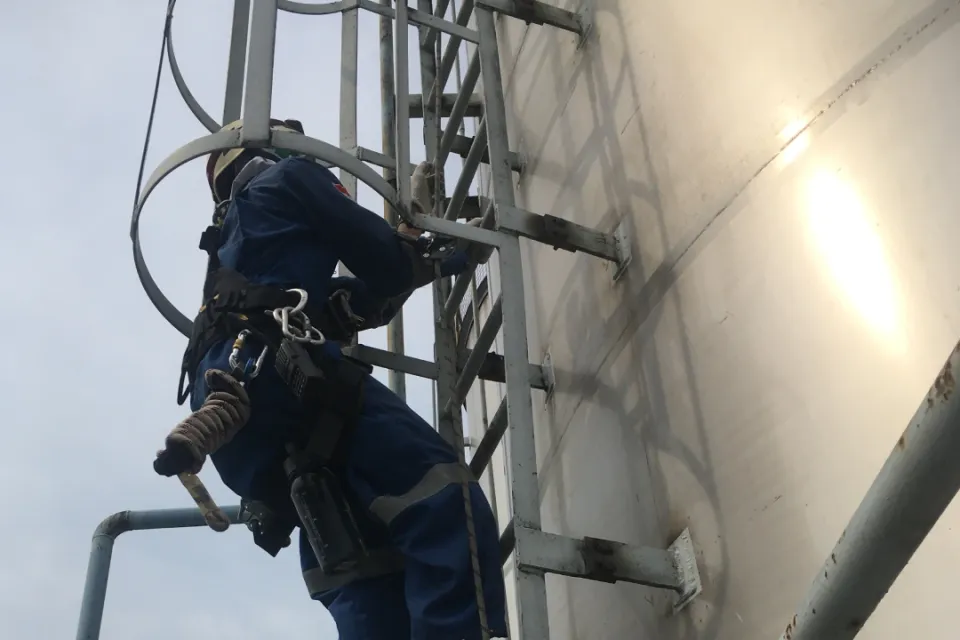
3. PPE for Oil, Gas, and Mining
The oil, gas, and mining industries face risks of explosion, toxic gas, and fire. Explosion-proof helmets, respirators with specialized filters, and fire-resistant clothing form the minimum standard. Gloves and footwear in this sector must also resist chemicals, in addition to standard abrasion resistance.
Work areas in this sector are typically mapped into hazard zones, ranging from zones with a high risk of flammable gas to relatively safer areas. PPE used in high-risk zones must be intrinsically safe, meaning it cannot trigger even the smallest static electrical spark.
Underground mine workers face an additional risk in the form of limited oxygen and restricted ventilation. A respirator with a self-contained air supply becomes mandatory in such areas, unlike the standard filter respirators used at the surface.
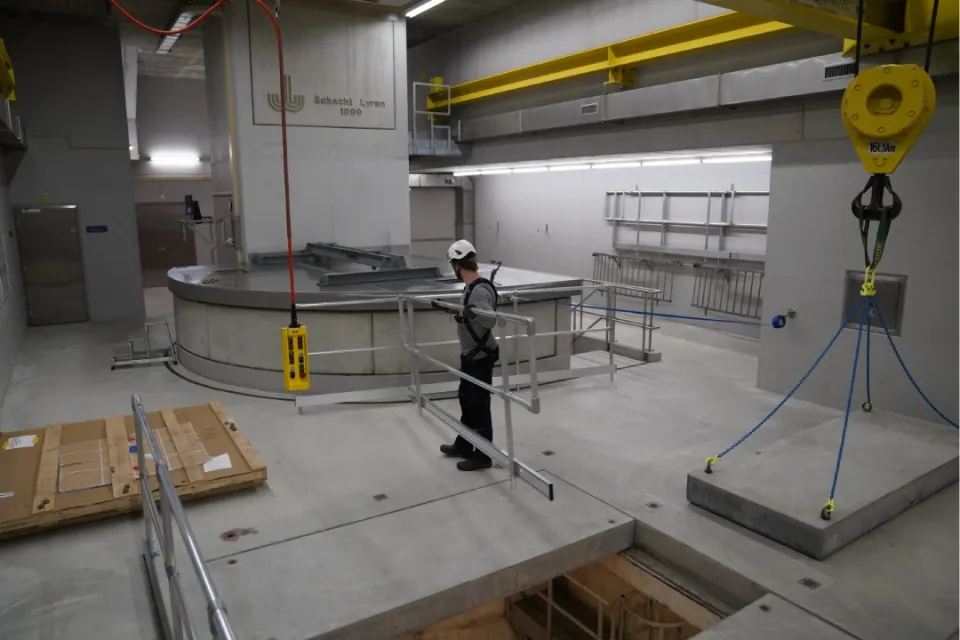
4. PPE for Factories and Manufacturing
Factories with heavy machinery carry risks from noise, heat, and rotating parts. Ear protection, goggles, heat-resistant gloves, and respirators form a common combination. Operators working near production machinery also typically wear long-sleeved protective clothing to reduce the risk of getting caught in moving parts.
Production machinery with rotating components also comes with its own rules regarding work attire. Loose clothing or dangling accessories become an additional hazard, since they can get caught in moving machine parts.
Factories involved in welding or metal casting add heat-resistant aprons and full face shields to the basic combination. This is different from CNC machine operators, whose risk leans more toward small metal fragments and constant machine noise.
How to Choose the Right Type of PPE Through Hazard Identification (HIRADC)
Choosing the right type of PPE starts with hazard identification, not with a product catalog. Below are the steps safety professionals typically follow before determining the PPE for a given work area.
- Identify potential hazards in each work area, including physical, chemical, and biological hazards.
- Assess the risk level of each hazard identified, determining which is most likely to occur and which would have the most severe impact.
- Determine the type of PPE suited to that specific hazard, rather than generic PPE for every condition.
- Make sure the selected PPE meets SNI or the relevant international standards.
- Provide usage training, then carry out ongoing evaluation and reporting in line with Article 7 of the Permenaker regulation.
Companies that already hold occupational health and safety (K3) certification tend to run this process systematically, rather than scrambling for it only when an inspection is due.
Standards and Functions Table for Each Type of PPE
To make comparison easier, here is a summary of the eight types of PPE, along with their main function and reference standard.
| Type of PPE | Main Function | Reference Standard | Example |
|---|---|---|---|
| Head Protection | Resists impact and falling objects | SNI, ANSI Z89.1 | Safety helmet |
| Eye and Face Protection | Resists chemical splashes and particles | SNI, ANSI Z87.1 | Safety glasses, face shield |
| Ear Protection | Resists pressure and noise | SNI, ISO 4869 | Earplugs, earmuffs |
| Respiratory Protection | Filters dust, gas, and chemical vapor | SNI, EN 149 | Masks, respirators |
| Hand Protection | Resists heat, chemicals, and cuts | SNI, EN 388 | Work gloves |
| Foot Protection | Resists falling objects and punctures | SNI, EN ISO 20345 | Safety shoes |
| Protective Clothing | Resists extreme temperatures and fire | SNI, EN 13688 | Coveralls, aprons |
| Personal Fall Protection Equipment | Absorbs body load during a fall | SNI, EN 361, ANSI Z359.11 | Full body harness, lanyard |
The effectiveness of PPE is not an empty claim. Citing the journal Impact of personal protective equipment in preventing occupational injuries (DOI: 10.3389/fpubh.2025.1720363), researchers found that PPE use is associated with a lower risk of workplace injury, while a higher prevalence of injuries actually occurs when PPE is available but not accompanied by proper fit, training, and consistent supervision. In other words, the equipment alone is not enough without a supporting system around it.
How Long Can PPE Be Used Before It Needs Replacement?
The usable lifespan of PPE varies by type, but the rule stays the same. As soon as there are signs of damage, the equipment must be replaced, regardless of how long it has been in use.
A full body harness, for example, is generally recommended by manufacturers for webbing replacement every 5 years, even if no visible damage is present. Synthetic webbing fibers degrade from UV exposure and friction over time, even without a single fall incident.
Safety helmets are typically replaced every 3 to 5 years, or immediately after taking a single hard impact. A cracked helmet shell loses most of its energy-absorbing capability, even if it still looks intact to the naked eye.
Maintaining PPE on a regular basis is a step that often gets neglected, even though this process determines whether the equipment is still fit for use or needs to be retired earlier than scheduled.
FAQ About Types of PPE
What are the 8 types of PPE under Permenaker No. 8 of 2010?
The eight types are head protection, eye and face protection, ear protection, respiratory protection, hand protection, foot protection, protective clothing, and personal fall protection equipment along with flotation devices.
Are visitors entering a project site required to wear PPE?
Yes. Under Article 5 of Permenaker No. 8 of 2010, anyone entering a work area with potential hazards must wear appropriate PPE, including visitors and contractors.
Who is responsible for providing PPE, the worker or the company?
The company is required to provide PPE free of charge to workers under Article 2 of Permenaker No. 8 of 2010, rather than passing the cost on to the worker.
What happens if damaged PPE is not replaced?
Damaged personal fall protection equipment and helmets lose most of their protective function, which significantly increases the risk of fatal injury in the event of an incident.