Supporting the Body in a Demanding Industry:
What Exoskeletons Could Mean for Australian Construction.
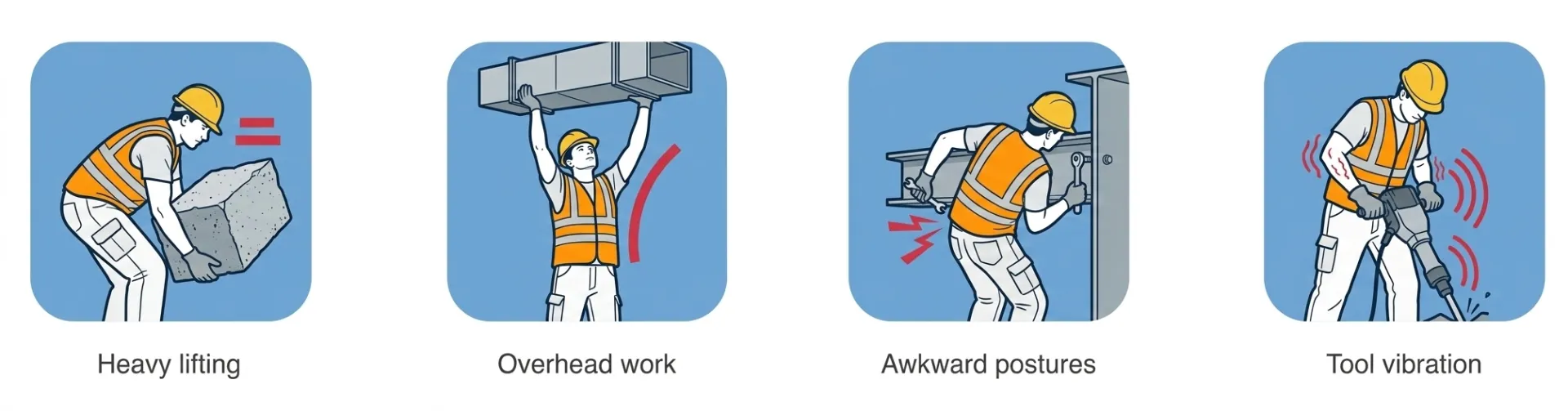
Construction is one of the most physically demanding industries in the world – and Australia is no exception. From lifting heavy materials to repetitive bending, twisting and working in awkward positions, construction workers face significant physical strain every day.
Over time, these demands take a toll on the body. Back pain, shoulder strain and knee injuries are common across the industry, and many experienced tradespeople leave the workforce early due to chronic musculoskeletal injuries. In a sector already facing major skills shortages, protecting the long-term health of workers has never been more important.
The Real Cost of Injury to the
Australian Construction Industry
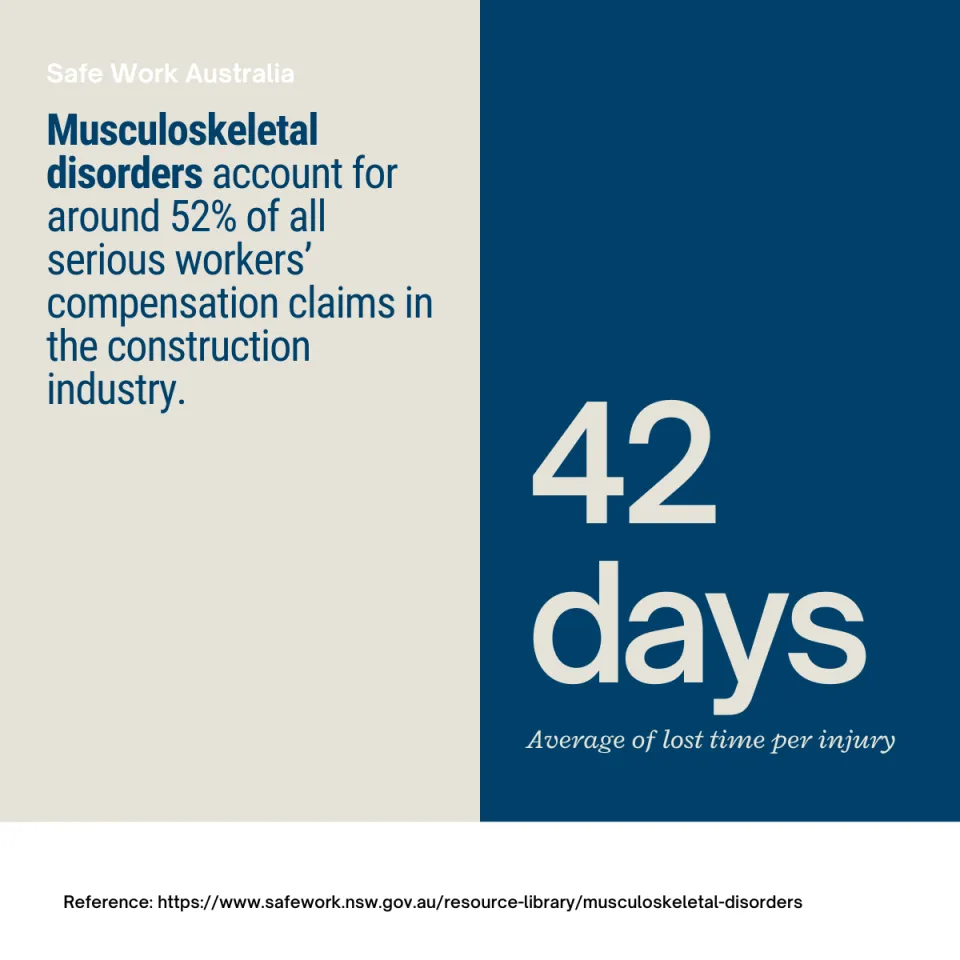
According to Safe Work Australia, musculoskeletal disorders account for around 52% of all serious workers’ compensation claims in the construction industry. Lifting, carrying and handling materials are consistently listed as some of the leading causes of these injuries. This result in an average of more than six weeks (around 42 days) lost time per injury.
Beyond the human impact, the financial cost is substantial. Data from Safe Work Australia and the Australian Bureau of Statistics suggests that workplace injuries cost the Australian economy over $28 billion each year, with construction accounting for a significant share due to its high injury rates and physically demanding tasks. For construction businesses, these injuries translate into lost productivity, project delays, rising insurance premiums and the loss of skilled workers—making prevention and ergonomic solutions increasingly important for both safety and long-term industry sustainability.
At the same time, the construction sector remains one of Australia’s largest employers. Data from the Australian Bureau of Statistics shows over 1.3 million Australians work in construction, making workforce sustainability a critical issue for the industry’s future.
A European Example: Thomas & Piron
One company exploring new ways to support workers is Thomas & Piron, one of Belgium’s leading construction and real estate development firms. With projects across Belgium, Luxembourg and France, the company has built a reputation for quality construction while prioritising the wellbeing of its workforce. Thomas & Piron is a prominent, family-owned construction and real estate development group founded in Belgium in 1976. It is widely recognized as a market leader in residential construction within the French-speaking part of Belgium and Luxembourg.
The Challenge:
Heavy Work, Every Day.
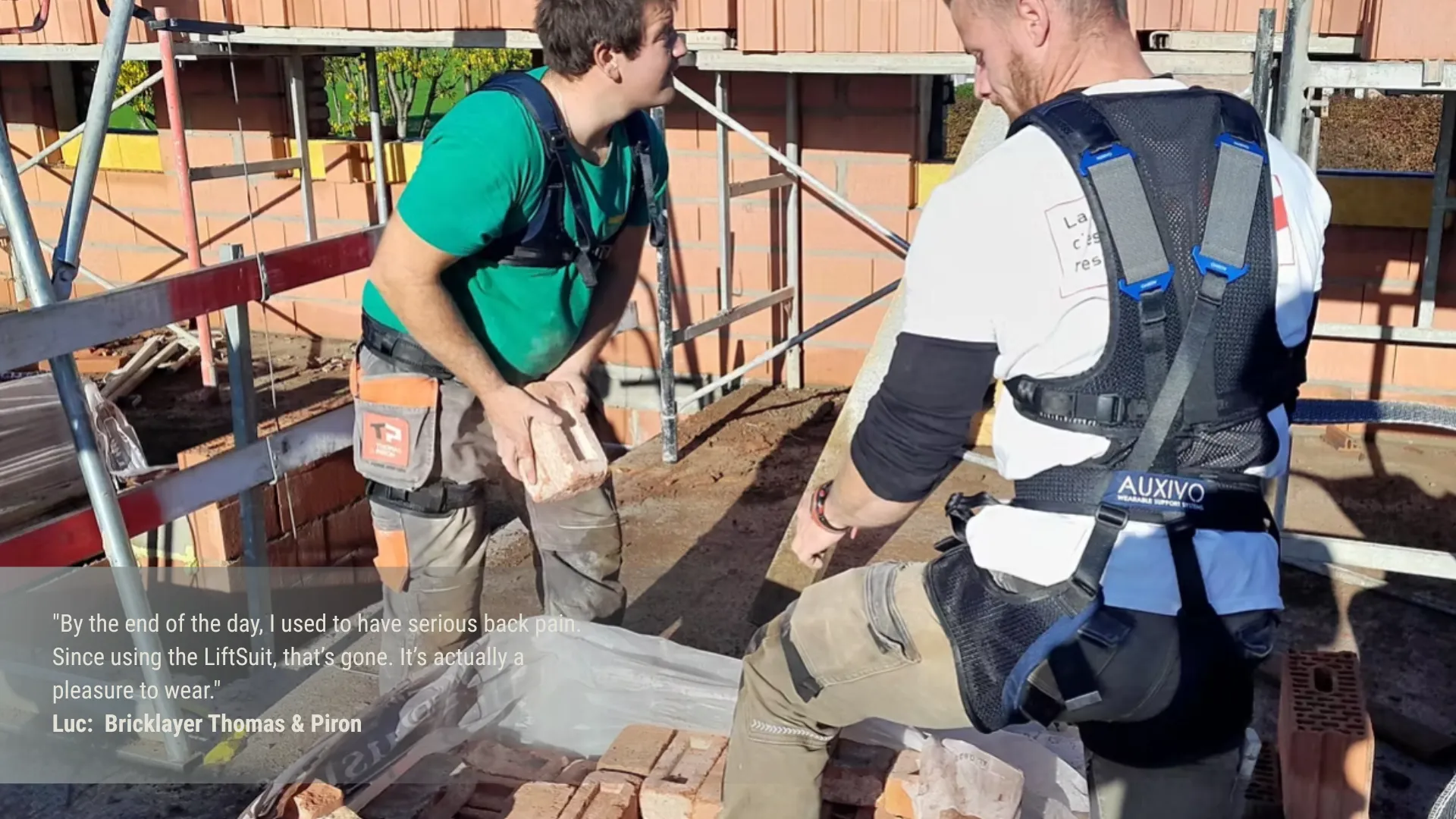
On many construction sites, physical strain is unavoidable. Tasks such as laying masonry blocks, installing partitions, mixing mortar and transporting materials require repeated lifting and manual handling throughout the day.
Materials weighing more than 20 kg are regularly lifted, carried and positioned manually. Over time, this repetitive strain can lead to fatigue, discomfort and an increased risk of injury.
For companies operating in Australia, the challenge is similar. As construction demand grows and projects become more complex, maintaining productivity while protecting workers’ health is an increasing priority.
The Solution:
Wearable Support for Physical Work
In 2023, Thomas & Piron began introducing a new tool on selected construction sites: the Auxivo LiftSuit.
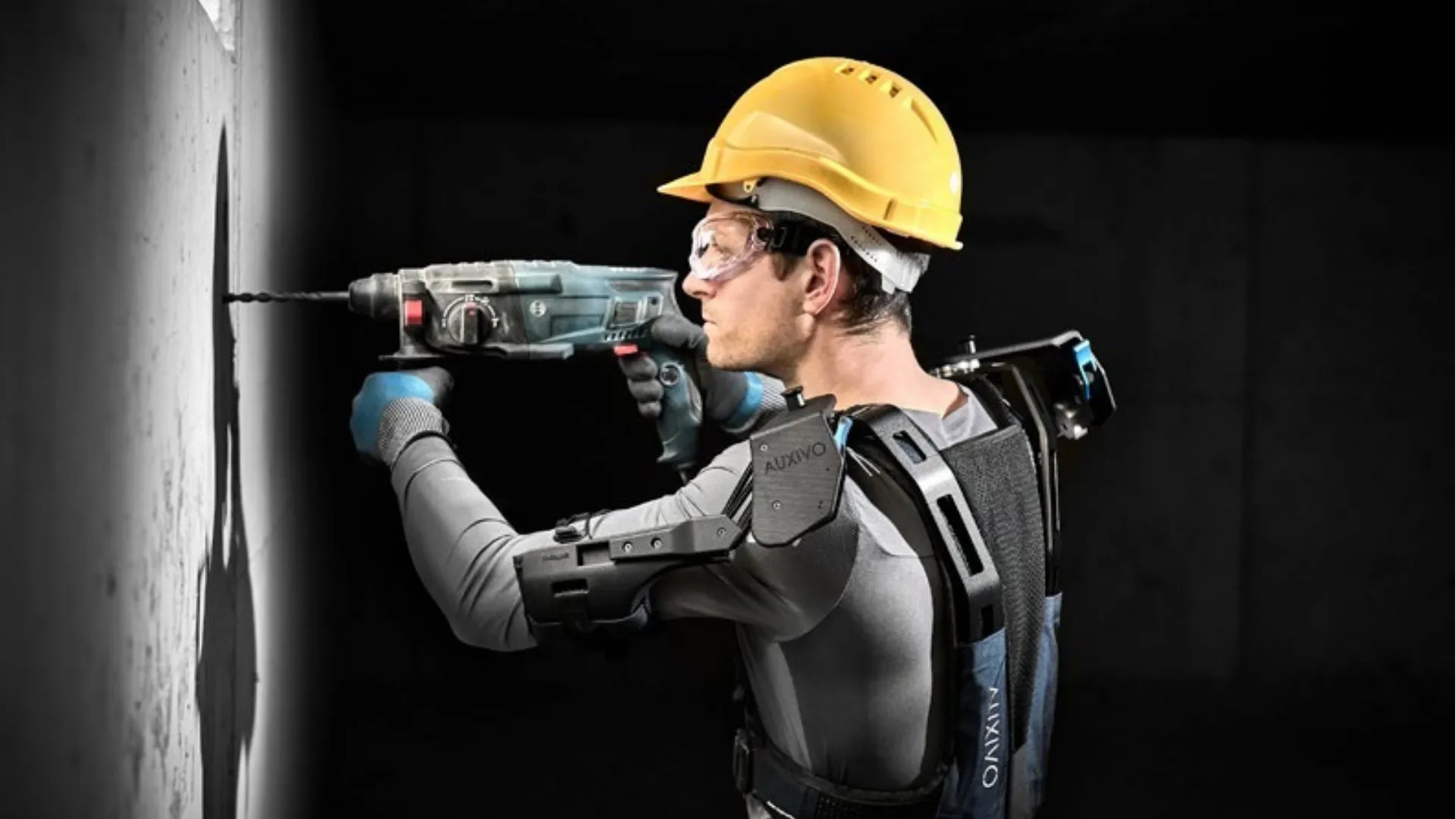
The LiftSuit is a textile-based passive exoskeleton designed to support the lower back during physically demanding movements such as lifting, bending or prolonged standing.
Rather than replacing manual work, it assists the wearer by redistributing loads and reducing strain on the lower back.
Workers quickly noticed the difference.
“By the end of the day I used to have serious back pain. Since using the LiftSuit, that’s gone. It’s actually a pleasure to wear.”
The Results
The trial program delivered several measurable outcomes:
- Reduced reports of back pain and fatigue
- Increased comfort during repetitive tasks
- Workers maintained – and in some cases improved – productivity
- Greater job sustainability for experienced tradespeople
Most importantly, the technology supported skilled workers without slowing them down or forcing them to change how they work.
What This Means for the Australian Construction Industry
With construction projects increasing across Australia and the industry facing ongoing labour shortages, solutions that help workers stay healthy and productive are becoming increasingly valuable.
Wearable technologies such as industrial exoskeletons have the potential to:
- Reduce strain from manual handling
- Extend the careers of skilled tradespeople
- Improve worker wellbeing on physically demanding sites
- Support safer and more sustainable construction practices
For cbusinesses looking to improve workplace ergonomics, these technologies represent an emerging tool in the broader safety and productivity toolkit.
Supporting Australian Workers
As the Australian partner for Auxivo, SpanSet Australia is working with industry partners to introduce wearable ergonomic solutions that support workers in demanding environments.
Because when it comes to safety, the goal isn’t just preventing accidents — it’s protecting the people who keep the industry moving.
We offer trials and onsite demonstrations for your construction business.
Physical Demands in Construction
Construction is tough on the body. Lifting, bending, and working overhead every day puts constant pressure on the back, shoulders, and other joints. This leads to pain and fatigue over time.