World Day
for Safety and Health at Work: 2026
Why the Future of Safety Is No Longer Just Physical
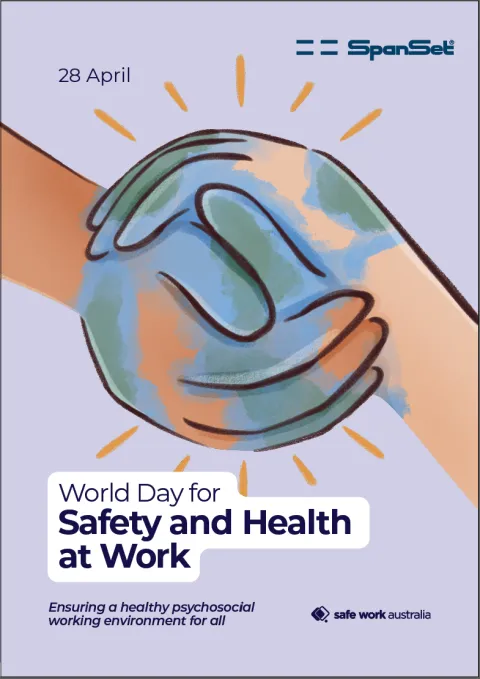
Every year on 28 April, World Day for Safety and Health at Work invites organisations across the globe to reflect on what it really means to keep people safe at work. In 2026, the focus is clear: creating healthy psychosocial working environments and managing the growing impact of mental strain, workload pressure, and fatigue in modern workplaces.
For many industries, this marks an important shift in thinking. Safety is no longer defined solely by what we can see: moving machinery, height risks or physical hazards—but also by how work is designed, managed and experienced by people every day.
Safety Has Evolved Beyond the Physical
Traditionally, workplace safety systems were built around visible hazards. Guards, harnesses, procedures, and training all aimed to reduce the risk of physical injury.
But today’s workplaces are more complex.
High productivity demands, labour shortages, shift work, and repetitive manual handling tasks mean that fatigue and musculoskeletal strain remain persistent risks across construction, manufacturing, logistics, and utilities.
Alongside this, psychosocial hazards such as workload pressure, lack of recovery time, and sustained physical strain are now recognised as key contributors to both injury risk and long-term health outcomes.
The result is a broader understanding of safety: one that connects physical capability, human endurance, and system design.
The Hidden Cost of Manual Work
Musculoskeletal injuries remain one of the most common and costly workplace injury types in Australia.
Unlike acute incidents, these injuries often develop gradually—through repetition, fatigue, and cumulative strain. Over time, they impact not only workers’ wellbeing but also productivity, absenteeism, and long-term workforce sustainability.
For many organisations, the challenge is no longer simply preventing incidents—it is sustaining human performance safely across the entire working day.
Where Technology and Human Performance Meet
This is where new approaches to ergonomic support are beginning to emerge across global industries.
Workplaces are increasingly recognising that safety performance is not only influenced by equipment and procedures, but also by how long the human body can sustain physical effort without breakdown in posture, strength, or focus. As a result, attention is shifting toward solutions that help manage fatigue and physical strain as part of everyday operations, rather than as a response after injury has occurred.
Wearable assist technologies, including industrial exoskeletons, are one example of this evolution. Rather than replacing workers or changing the task itself, these systems are designed to support the body during physically demanding activities such as repetitive lifting, overhead work, or sustained manual handling.
The aim is not to remove human capability from the process, but to help extend it safely across the working day by reducing unnecessary load on key muscle groups and improving endurance during repetitive tasks.


Bringing Science Into the Workplace
Alongside established height safety, lifting, and load control systems, new categories of wearable support technology are beginning to appear within broader workplace safety strategies.
SpanSet’s introduction of the Auxivo exoskeleton range reflects this shift, positioning the technology as an additional layer of ergonomic support rather than a standalone solution. In practical terms, it sits alongside existing controls—helping reduce physical strain during repetitive or sustained tasks while organisations continue to rely on engineered systems, training, and procedural safeguards.
For many workplaces, the value is not in replacing current safety approaches, but in extending them to better account for human fatigue and endurance across a full shift.
A Broader Responsibility for Safety Leaders
World Day for Safety and Health at Work is a reminder that safety systems must evolve alongside the way work is changing.
For safety leaders, the challenge is no longer just compliance—it is foresight:
- How do we reduce strain before injury occurs?
- How do we support workers through fatigue, not just manage incidents?
- How do we design work that aligns with human capability?
These are no longer future questions. They are present-day operational issues.
Looking Forward
As industries continue to evolve, so too must the tools and thinking that support them. Whether through better task design, improved recovery systems, or emerging wearable technologies, the future of workplace safety will increasingly focus on supporting the human body—not just protecting it. World Day for Safety and Health at Work is an opportunity to pause and recognise that shift—and to ask a simple but important question:
Are our systems designed for the work we ask people to do today?