

Understanding Harnesses and Their Components
A full body harness is made up of several key parts that work together to protect a worker during a fall: webbing straps, D-rings, buckles, padding, labels, and a fall arrest indicator. Each part has a specific job, and understanding them helps you choose, wear, and inspect a harness correctly.
Before we break down each part, it helps to know why this matters. According to ANSI/ASSP Z359.11, the standard that governs full body harness design in the United States, a full body harness is officially defined as a body support designed to distribute fall arrest forces across the thighs, pelvis, chest, and shoulders. This is also why OSHA requires a full body harness whenever a worker is on a suspended scaffold more than 10 feet above the working surface, or working from a bucket truck or aerial lift. Every part described below exists to meet that requirement safely.
Main Parts of a Safety Harness
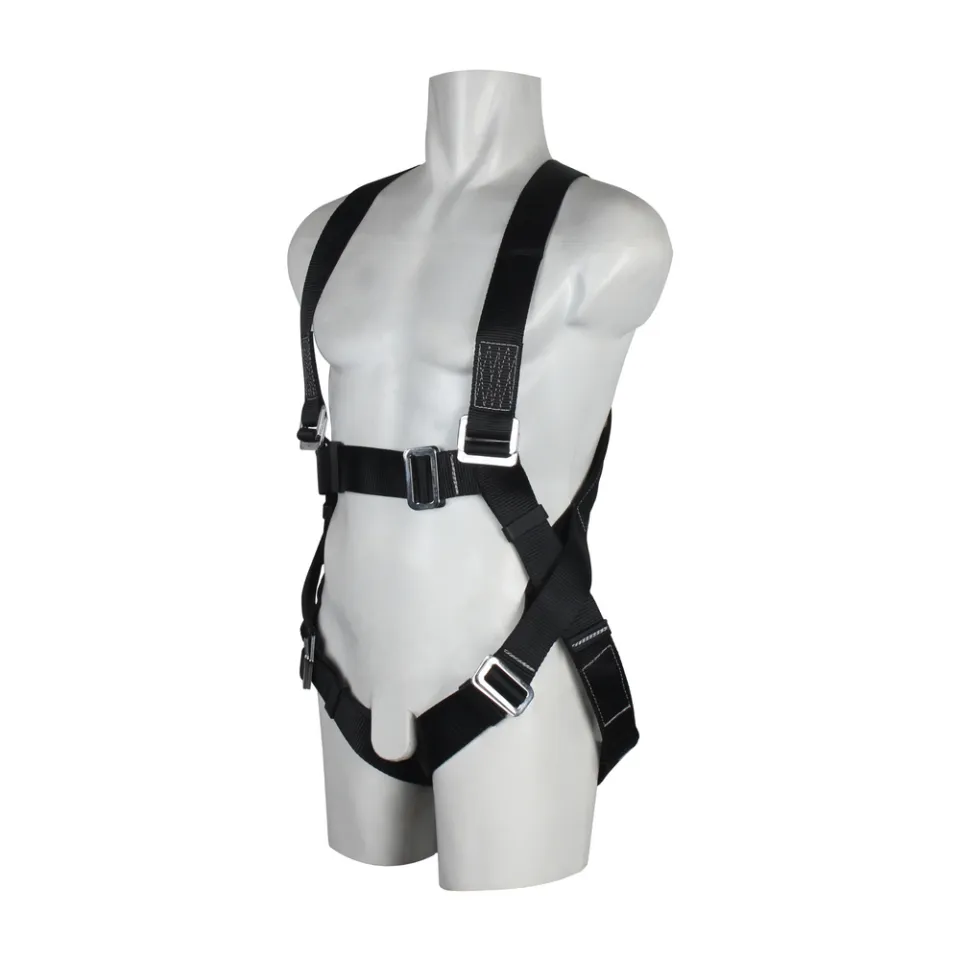
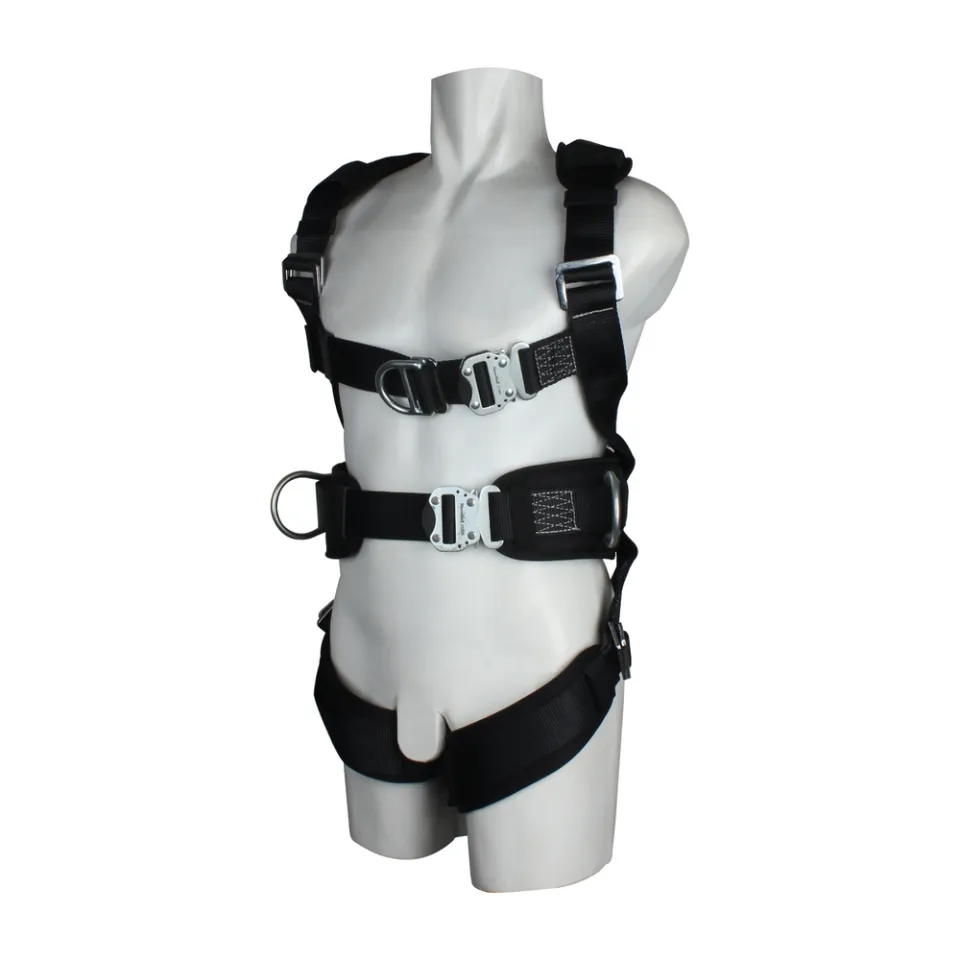
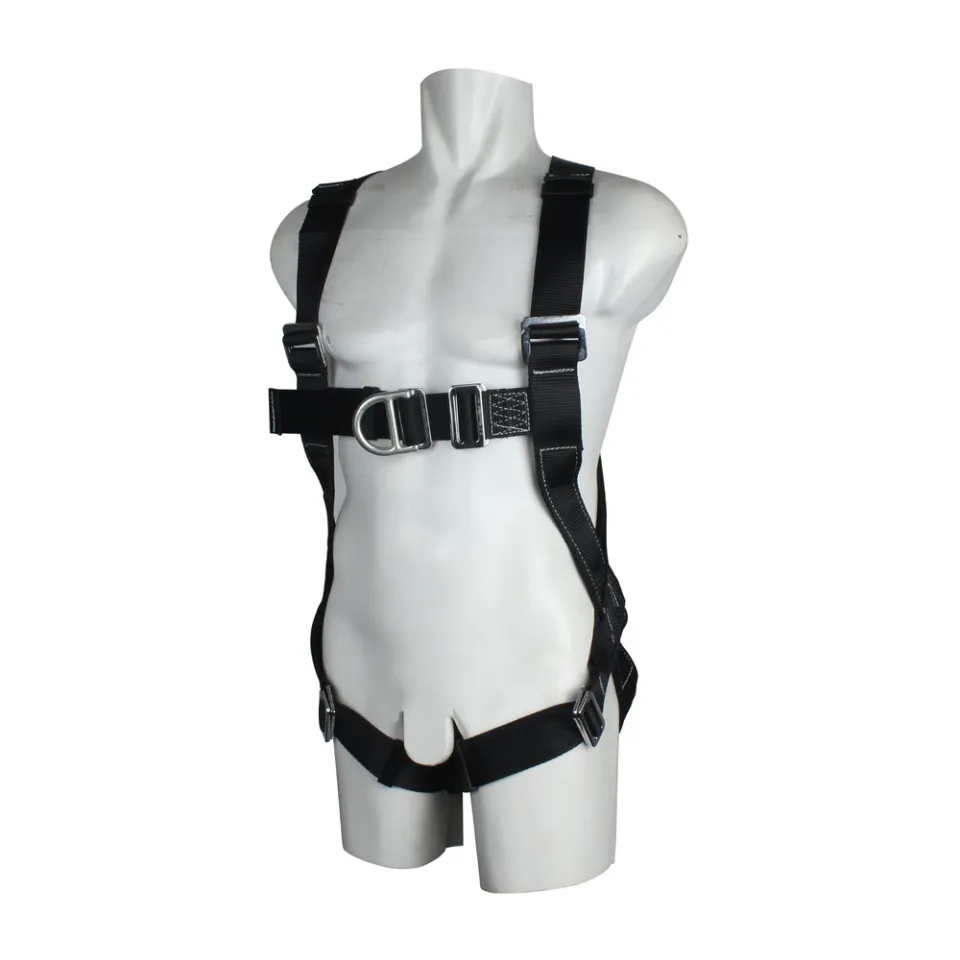
- Webbing straps - the fabric bands that form the shoulder, chest, waist, and leg sections of the harness. Usually made from polyester or nylon, with heavy-duty applications sometimes using Kevlar or Dyneema.
- D-rings - metal attachment points used to connect the harness to a lanyard or lifeline. A harness may have a dorsal D-ring (back), sternal D-ring (chest), or side D-rings, depending on the type of work.
- Buckles - used to adjust and secure the harness to the body. Common types include quick-connect buckles, tongue buckles, and pass-through buckles.
- Padding - cushioning on the shoulder and back straps that improves comfort during extended wear and helps prevent strap slippage.
- Labels - required tags showing certification standard, manufacture date, model, and inspection history. Under Z359.11, labels must also include usage pictograms.
- Impact / fall arrest indicator - a stitched section near the dorsal or sternal D-ring that visibly tears or deploys after a fall, showing that the harness has absorbed fall force and must be taken out of service.
Together, these components must meet strict strength requirements. Under ANSI/ASSP Z359.11, load-bearing straps must hold a minimum breaking strength of 5,000 lbs (22.2 kN) when new, and key attachment points are tested to hold 3,600 lbs (16.0 kN) for at least one minute without failure.
How the Parts Work Together
Each part plays a different role depending on the task:
- Fall arrest - relies mainly on the dorsal D-ring and the impact indicator to safely stop and signal a fall.
- Work positioning - uses side D-rings so a worker can lean back and work hands-free.
- Rescue and retrieval - typically connects between the shoulder blades or above the head, allowing a worker to be safely lifted from a confined space.
To see how these parts differ across harness models, read our guide on types of safety harnesses and lanyards, or browse SpanSet's full range of certified safety harnesses.
Why Each Part Matters for Safety
A harness is only as strong as its weakest part. A frayed strap, a cracked buckle, or a deployed impact indicator can mean the harness will not perform in a real fall. This is why regular inspection of every part listed above is required before each use. For a step-by-step walkthrough, see our guide on how to wear a body harness correctly, and learn more about what each part of a full body harness actually does.
If you're ready to choose a harness, SpanSet's full body harness range is manufactured to meet EN 361 and equivalent international standards, with each part - from D-rings to webbing - tested to the same requirements described above.
Frequently Asked Questions
What are the main parts of a safety harness?
The main parts are the webbing straps, D-rings, buckles, padding, labels, and the impact indicator. Together they distribute fall force across the thighs, pelvis, chest, and shoulders.
What is the D-ring on a harness used for?
The D-ring is the metal attachment point used to connect the harness to a lanyard, lifeline, or rescue line. Its location (back, chest, or side) depends on whether the harness is being used for fall arrest, positioning, or rescue.
How do I know if a harness part is damaged?
Check the webbing for cuts, fraying, or chemical damage, inspect buckles for cracks or corrosion, and look at the impact indicator - if it has deployed or torn, the harness must be removed from service immediately.
What standard governs full body harness parts?
In the United States, full body harnesses are governed by ANSI/ASSP Z359.11, which sets requirements for the design, strength, marking, and testing of each harness component.
How often should harness parts be inspected?
A harness should be visually inspected before every use, and undergo a more thorough formal inspection by a competent person at least every six months, or more frequently if used in harsh conditions.
Reviewed by the SpanSet Height Safety team. Last updated July 2026.