SpanSet's
Load Restraint Training for Scaffold Transport
Scaffolding loads present unique risks. Learn how to secure poles, boards and fittings safely and compliantly.
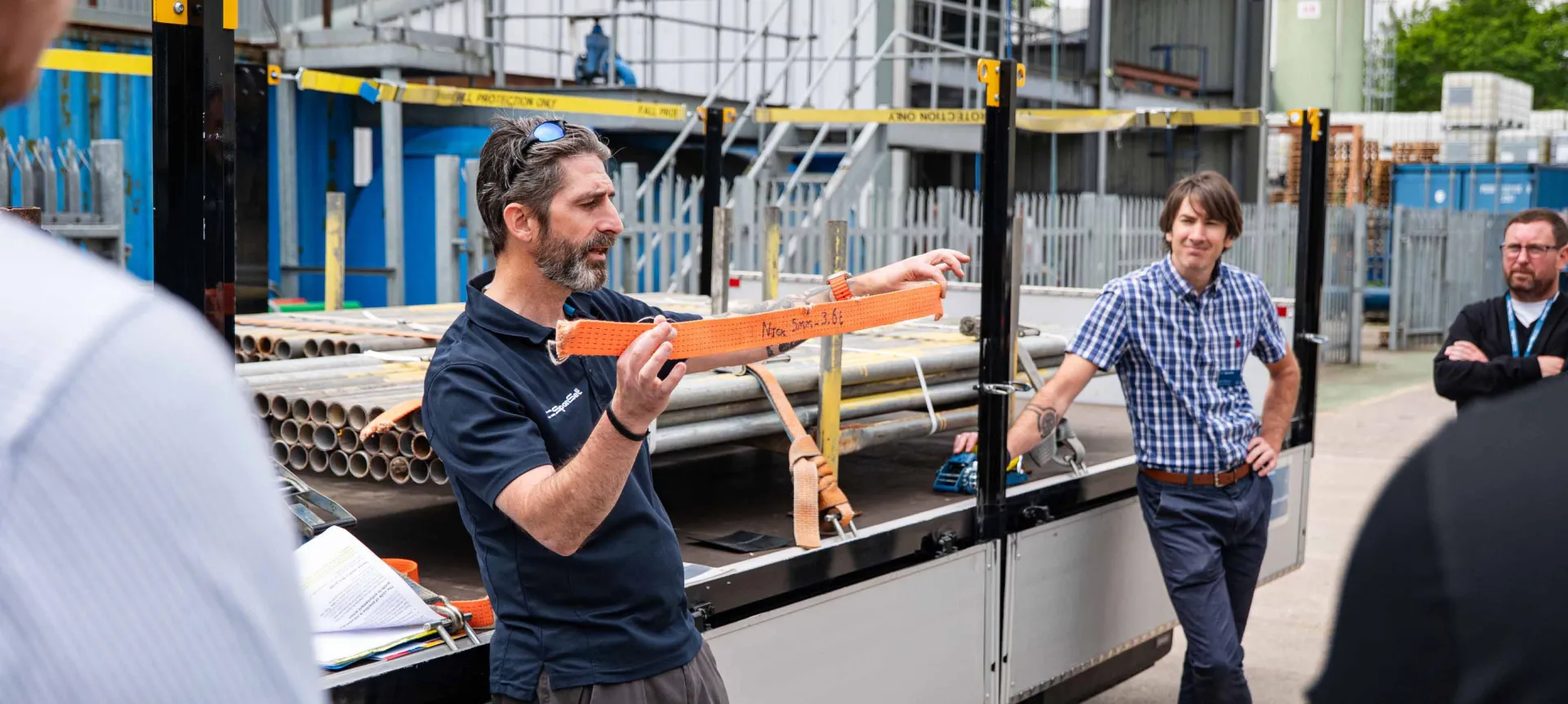
SpanSet's
Load Restraint Training for Scaffold Transport
Scaffolding loads present unique risks. Learn how to secure poles, boards and fittings safely and compliantly.
The Challenge: Securing Scaffold Loads
Transporting scaffolding isn’t the same as transporting general goods. Each component brings unique risks:
- Metal tubes: Divisible loads, low friction (metal on metal is slippery). Require correct lashing (not just frictional lashings).
- Boards (wooden/metal): Risk of contamination with oil/chemicals affecting grip.
- Fittings: Small, heavy items must be secured in stillages – even a single fitting falling at speed can be fatal.
- Mixed loads: Often combine multiple materials, increasing complexity.
Scaffolding equipment that isn’t safely secured is a danger to the driver, loader and other road users.
Why Load Restraint Matters
The same care and expertise should be used when loading and securing scaffolding equipment onto a vehicle for transportation to and from site as is used when erecting the scaffolding on site.
- 138 workers killed in UK work-related accidents 2023/24
- 51 in construction, 11 in transport & storage
- Legal requirement: Road Traffic Act 1988 & workplace safety legislation
- Both the driver and operator are responsible for safe loads
*HSE Work related fatal injuries in GB 2024
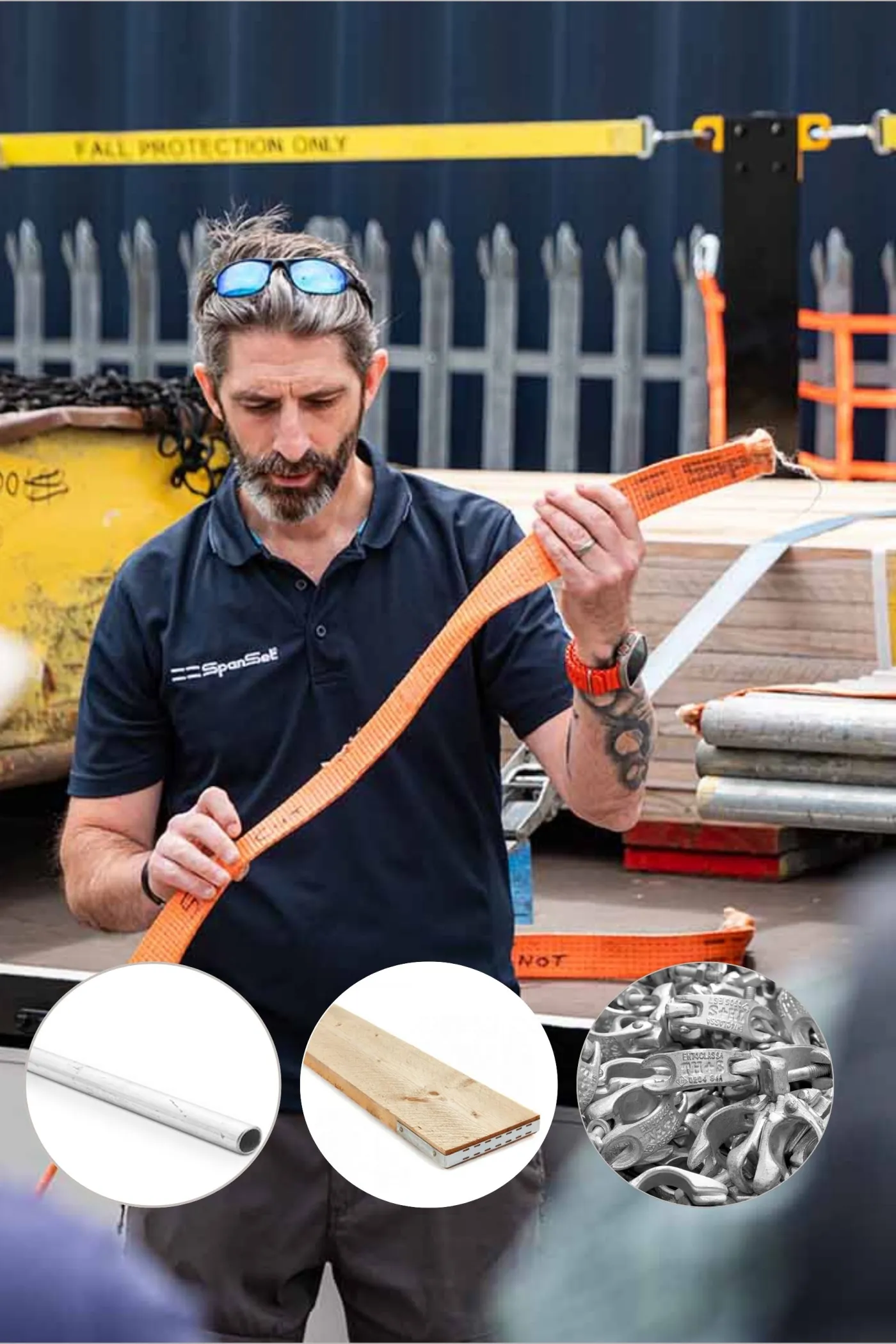
Load Restraint Appreciation & Inspection Training
Duration: 1 Day (7 hours CPC accredited)
Who it’s for:
- Scaffold contractors & hauliers transporting scaffold equipment
- Drivers & consignors responsible for loading/unloading
- Site managers planning or overseeing transport operations
Counts as 7 hours towards Driver CPC training requirements.
What You’ll Learn
How to:
- Select the most suitable method for securing the load (scaffold tubes, boards & fittings)
- Calculate the right number of lashings with the correct load rating to prevent the load from shifting.
- Understand how forces act on a load during transit.
- Use direct or frictional lashing and the difference between the two.
- To inspect and maintain Load Control equipment.
- Legal responsibilities under Road Traffic & H&S regulations


Why Training is Essential
There is a skills gap:
- Many drivers have no formal training in scaffold load restraint, learning from their colleagues – sometimes incorrect information is passed along.
- Often untrained Drivers believe frictional lashings alone are good enough to secure tubes over the headboard. This isn’t the case; best practice recommends tubes should be choked.
- Poorly secured scaffolding has led to serious accidents and fatalities.
- Complex scaffold loads demand specialist training – SpanSet's Load Restraint training is the most comprehensive course available in the UK.
SpanSet bridges this skills gap.
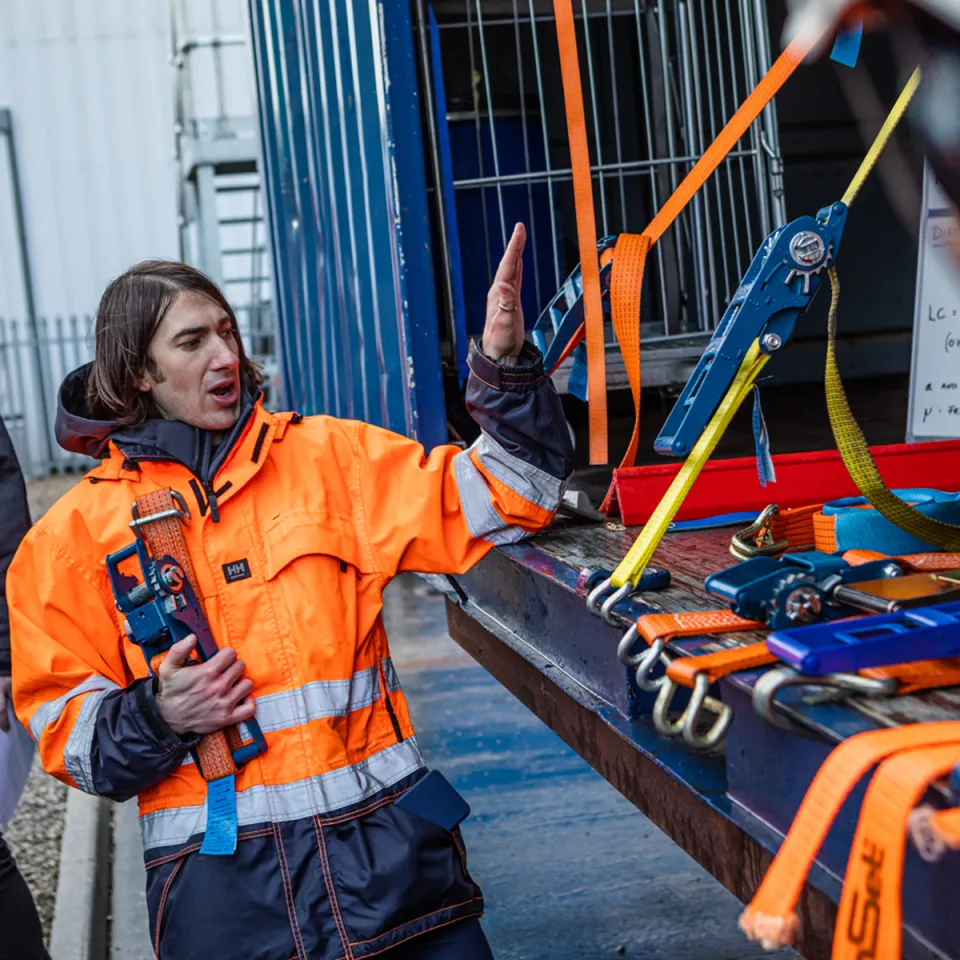

Trainer's Insight
"It’s not unusual for candidates who have been in the transport industry for years to arrive for this 7-hour course, sit down, cross their arms and look at me as if to say, ‘what can you teach me today?’
I drove HGV’s including *STGO CAT3 for years both in the military and commercially – you name it, I’ve shifted it – from crashed helicopters to Christmas decorations for major supermarkets. I use this experience, together with my training at SpanSet to pass on knowledge. It’s great to hear how, by the end of a course, delegates feel empowered having learnt new skills and how much they’ve enjoyed the course. Good to see those arms unfolded too!"
Lee Sparks, SpanSet Training Instructor
*Special Types General Orders - wide, long heavy loads. CAT3 is up to 150 tonne. Normal artic lorries are 40 tonne.
