Height Safety


TKPK for High-Rise Projects

Safety Standards and Personnel Certification

Working on skyscrapers involves extremely high risks. Safety in high-rise work cannot be measured by equipment alone; personnel competence is equally essential. The required competency is Tenaga Kerja Bangunan Tinggi (TKPK). Through a strict occupational health and safety (OHS) management system, TKPK personnel serve as the frontline in preventing fall-from-height accidents.

Regulations and Legal Framework of TKPK in Indonesia

Ministry of Manpower Regulation No. 9 of 2016 on OHS for Working at Height

This regulation is the primary legal framework governing all work activities conducted above ground or water level where there is a risk of falling. It requires employers and site managers to comprehensively implement OHS standards, including planning, work procedures, and the provision of compliant personal protective equipment (PPE).

Company Obligations to Provide Certified Personnel

Companies involved in high-rise projects are required to ensure that every worker exposed to fall hazards holds an official OHS license. Providing competent and certified personnel is mandatory to mitigate legal and financial risks in the event of workplace incidents.

Scope of Work in High-Rise Buildings
High-rise work covers a wide range of activities, including steel structure installation, facade (glass) installation, painting, and routine window cleaning. Each of these activities carries varying risk characteristics but must adhere to the same standardized working-at-height safety requirements.

SPANSET INDONESIA LIFELINE SAFETY

Practical for safety and work efficiency!

APPLY NOW

Classification and Roles of High-Rise Workers

Differences in Competency Between TKPK Level 1 and Level 2

TKPK Level 1 is generally intended for workers who use basic rope access methods or operate on already protected working platforms. In contrast, TKPK Level 2 has more advanced competencies, including the ability to perform rescue operations for co-workers and to install more complex anchorage systems and rope lines.

The Role of OHS Supervisors in High-Rise Projects

OHS supervisors carry significant responsibility to ensure that all safe work procedures are implemented without compromise. They are authorized to stop work if adverse weather conditions arise or if personal protective equipment (PPE) is found to be unfit for use (worn or damaged).

Limitations of Personnel Authority in High-Risk Work Areas

A TKPK worker is only permitted to perform tasks in accordance with the authority stated on their certification card. For example, workers without rope access certification are strictly prohibited from performing suspended work, even if fully equipped with PPE, to prevent potentially fatal technical errors.

Fall Protection System

Use of Height-Specific Personal Protective Equipment (PPE)

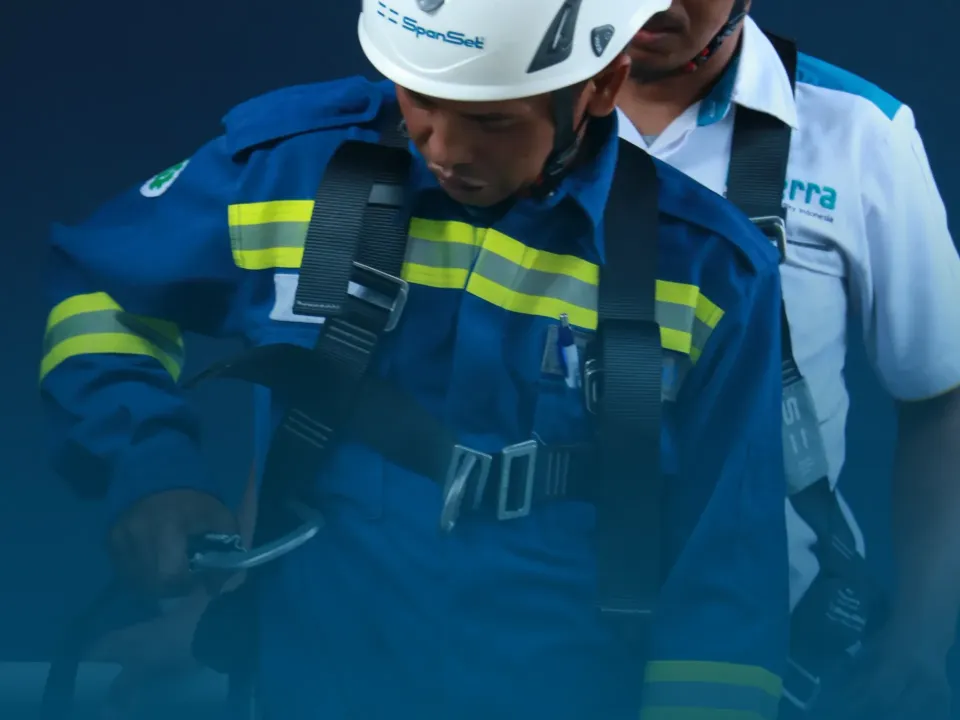
PPE for high-rise work is not the same as standard construction PPE. Helmets must be equipped with a chinstrap to prevent them from coming off during a fall, and every component must carry international certifications such as CE or ANSI to ensure material strength and reliability.

Working Principle of Fall Arrest vs Fall Restraint

Fall Restraint is a system designed to limit a worker’s movement so they cannot reach the edge of a hazardous area. In contrast, Fall Arrest is a system intended to stop a worker after a fall has occurred, preventing the body from striking the surface below directly.

Function and Strength of Anchor Points

An anchor point is where a rope or lanyard is attached. Technical standards require anchor points to withstand a minimum static load of 22 kN (approximately 2.2 tons) to ensure the system does not fail when subjected to the shock load of a falling person.

Equipment and Tools for Working at Height

Standard Full Body Harness with Double Lanyard

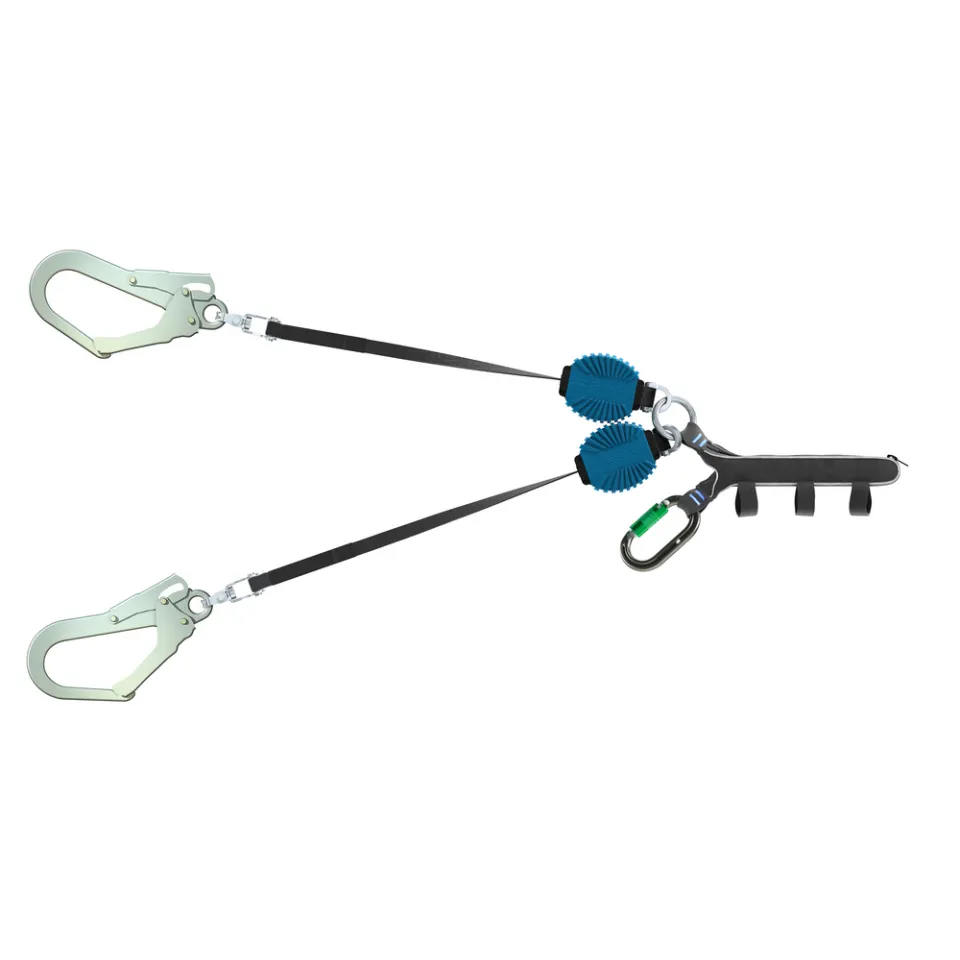
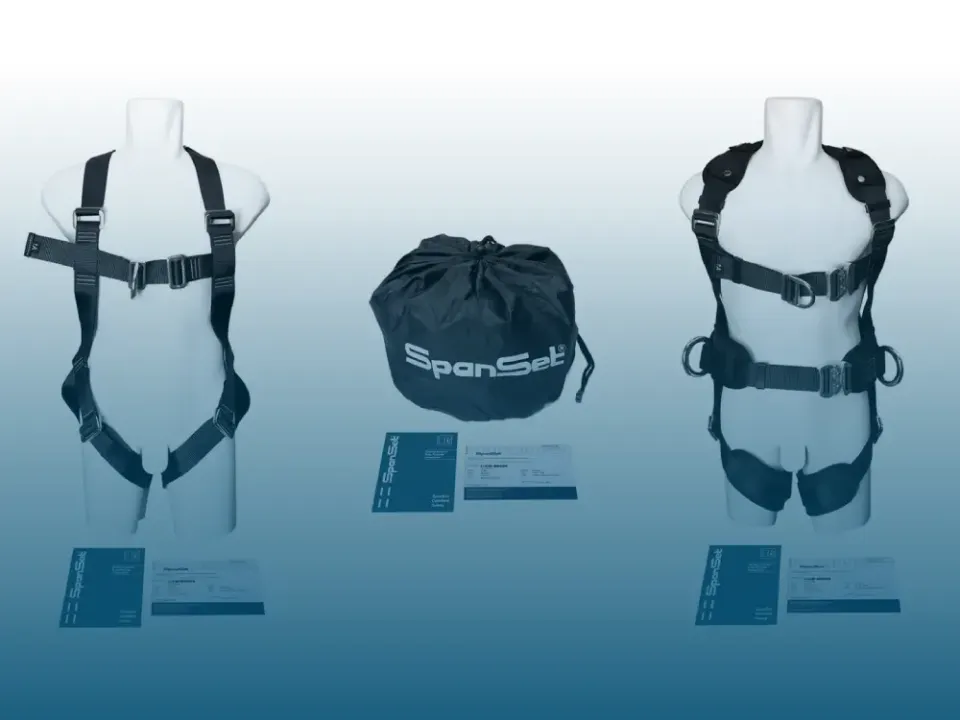
The use of a full body harness is mandatory, replacing ordinary waist belts to distribute impact forces to the thighs and shoulders during a fall. A double lanyard system ensures the worker remains continuously connected (100% tie-off) when moving from one anchor point to another.

Use of an Energy Absorber to Reduce Impact Forces

An energy absorber functions to dissipate kinetic energy during a fall through a controlled tearing mechanism in its stitching. Without this device, the sudden shock load of a fall can cause severe spinal injuries or serious internal organ trauma.

Function of Mobile Fall Arrester and Lifeline

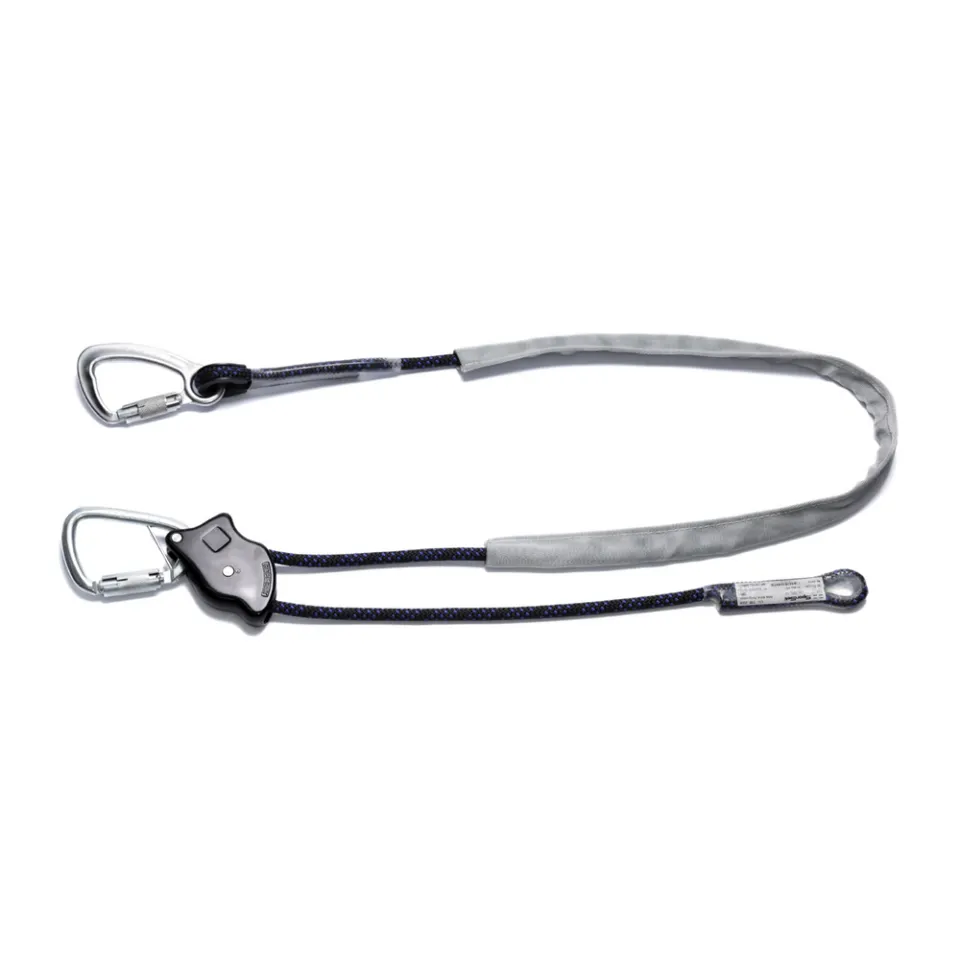
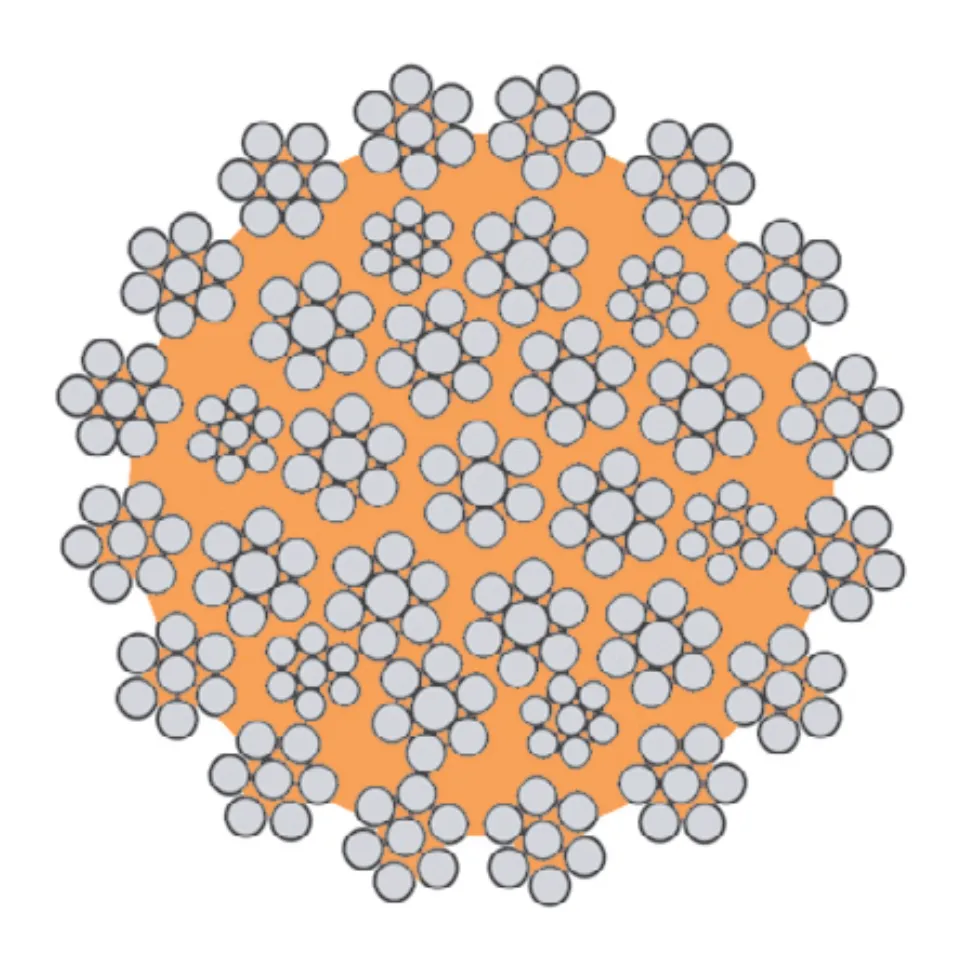
A lifeline is a steel or synthetic rope installed along the work path, while a mobile fall arrester is a device that travels with the worker. This device automatically locks in the event of sudden acceleration, similar to a car seatbelt mechanism.

Rope Access Techniques for High-Rise Buildings

Vertical Access Method Using Working Line and Safety Line

This technique uses two primary ropes: a Working Line for positioning and a Safety Line as a backup. This method is highly effective for building areas that cannot be reached by gondolas or scaffolding.

Ascending and Descending Techniques

TKPK personnel must master rope ascending techniques using mechanical devices, as well as controlled descending techniques. Proficiency with this equipment is crucial to prevent workers from becoming stranded at height for extended periods.

Redundancy Principle (Two Independent Safety Points)

In rope access, the redundancy principle requires that every load or person is always connected to two independent safety points. If one rope or anchor fails, the backup line will fully support the load.

Risk Analysis and Safe Work Procedures

Preparation of JSA (Job Safety Analysis) for Work at Height

Each work shift must begin with a specific JSA. The team identifies potential hazards such as falling objects, electrical exposure, or strong winds, and then determines the most effective mitigation measures.

Hazard Area Zoning (Drop Zone)

The area directly below work at height must be clearly barricaded and restricted from access. This is essential to prevent fatal risks to people below in case tools or materials accidentally fall.

Qualifications and Ministry of Manpower (Kemnaker) Certification

Official TKPK Training Curriculum

The official training covers fall force theory, material knowledge, and practical self-rescue techniques. Participants must pass both theoretical and practical examinations supervised directly by instructors from the Ministry of Manpower or authorized safety auditing bodies.

The Importance of Certification for Professional Competitiveness

Holding a Kemnaker TKPK OHS License is not only about safety but also enhances a worker’s professional value in the eyes of major construction companies. This certification serves as concrete proof that the worker is competent, qualified, and responsible.

As requested, the following is a complete draft article that integrates training materials from SpanSet Indonesia into the main structure. The format remains consistent with narrative explanations under each point to ensure a professional and in-depth presentation.

TKPK Training Program at SpanSet Indonesia

Training providers such as SpanSet Indonesia offer a curriculum specifically designed to meet Indonesian Ministry of Manpower (Kemnaker) standards while aligning with global industry practices. The following are the key materials covered in the program:

Understanding Work at Height and Fall Factor

Participants not only learn the theory but also understand the concept of Fall Factor to calculate potential fall distance. This knowledge ensures workers can determine the safest working method to minimize impact forces on the body in the event of an incident.

Types of Anchors and Knot Practice

Knowledge of selecting strong anchor points is critical in work at height. Participants are trained in tying various rope knots with high mechanical strength to ensure the entire safety system is properly installed.

Risk Analysis (JSA) and Work Permit Procedures

Participants are taught how to prepare a detailed Job Safety Analysis (JSA). This builds discipline in identifying specific hazards in high-rise environments before work begins, including proper work permit procedures.

Horizontal and Vertical Movement Techniques

This training includes techniques for moving along building structures, both horizontally and vertically. The objective is to ensure workers maintain good body coordination while remaining 100% protected (100% tie-off) during movement at height.

Practical Techniques for Lifting and Lowering Materials

Work on high-rise buildings often involves moving heavy materials. Participants are trained to use efficient hauling pulley systems to ensure stable material handling without endangering workers below.

Suspension Trauma and First Aid (Rescue)

This module covers how to handle a co-worker who becomes unconscious while suspended (suspension trauma). Participants are trained to provide first aid and perform emergency evacuation procedures before medical assistance arrives.

Training Output

In addition to practical knowledge and skills reinforced through interactive quizzes in each theoretical session, participants will receive official legal recognition:

Kemnaker RI Certificate and License (Authority Card)

Participants who pass will receive an official OHS Certificate and License from the Indonesian Ministry of Manpower (Kemnaker). This document serves as legal proof that you are a competent professional. Note: SKP and licenses are issued to company representatives, while individual participants may process them once employed.

Rope Access Techniques for High-Rise Buildings

Vertical Access Method Using Safety Lines

This technique uses two independent rope systems: a Working Line for positioning and a Safety Line as backup. This method is highly effective for areas that cannot be accessed by gondolas or scaffolding.

Redundancy Principle (Two Independent Safety Points)
In rope access systems, every worker must always be connected to two separate safety points. If one system fails, the backup system immediately takes over the load to prevent a free fall.
Interesting Articles

Main Components of Scaffold

Scaffolds have an important role in the world of construction. Then, what are the main components of the scaffold? Check out the following...


Find Us